



July 21, 2026
Cyclosporiasis in Utah: What You Need to Know
- Family Medicine
- Urgent Care

October 13, 2026 | Family Medicine

Colds, flu, and strep throat can cause similar symptoms, but they have different causes and symptom patterns. Colds and flu are viral infections, while strep throat is bacterial. Because symptoms overlap, testing may be needed to tell the difference.
As cold and flu season approaches, symptoms such as sore throat, fever, cough, or stuffy nose can leave you wondering what you’re dealing with and what to do next. Examining your symptoms can provide helpful clues.
Knowing the cause matters because these illnesses are treated differently. Antibiotics treat strep throat but do not work against the viruses that cause colds or flu. If your symptoms could be caused by strep or flu, a healthcare provider can evaluate them and determine whether testing is necessary and what treatment is appropriate.
The table below shows the most common symptoms of cold, flu, and strep throat and some of the key differences between them. For more information, check our Flu/Cold/Strep symptoms overview page.
While this chart can help you recognize common patterns, it shouldn’t be used as a diagnostic tool. Symptoms can vary from person to person, and there can be significant overlap between illnesses.
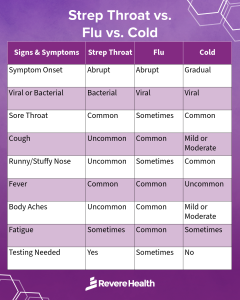
A cold develops gradually and has milder symptoms than the flu. Because colds primarily affect the upper respiratory system, symptoms that affect your lungs, nose, and mouth are common. These symptoms can include a runny or stuffy nose, sneezing, sore throat, and cough. Fever can occur with a cold, particularly in children, but it is less common in adults.
Unlike a cold, which often develops gradually, the flu can come on quickly. You may feel relatively well one day and develop several symptoms within a short period of time.
Flu symptoms can include cough, sore throat, headache, body aches, and fatigue. Some people may also experience a runny or stuffy nose, or fever and chills. Fever is commonly associated with the flu, but not everyone who has the flu will develop one.
One of the biggest differences between a cold and the flu is how the illness affects the rest of your body. Cold symptoms are often concentrated around the nose and throat, while the flu is more likely to leave you feeling tired, achy, and generally unwell.
Strep throat often begins with a sudden sore throat and pain when swallowing. A cold targets the upper respiratory system while the flu impacts the whole body. In contrast, strep symptoms start in the throat and are less likely to include a cough or runny nose.
Other signs and symptoms can include fever, red or swollen tonsils, tender or swollen lymph nodes in the front of the neck, and small red spots called petechiae on the roof of the mouth. Some people may also develop white patches or streaks of pus on their tonsils.
If you’re experiencing a cough, runny nose, hoarseness, or inflamed and irritated eyes (commonly known as pink eye), those point away from strep and toward viral infections.
However, while these symptoms help us recognize common signs of strep, you can’t confirm strep throat by looking at your symptoms or tonsils alone. If strep is suspected, a Revere Health provider can evaluate your symptoms and determine whether a strep test is needed and prescribe necessary treatment.
A cough is not a typical symptom of strep throat. A sore throat and cough are more commonly associated with a viral respiratory infection such as a cold or the flu.
However, symptoms can overlap, and it’s possible to have more than one illness at the same time. Persistent coughing from a viral infection could cause a sore throat. This is why consulting with trusted primary care providers is important. They are able to look at your overall combination of symptoms and, when appropriate, use testing to determine whether group A Streptococcus bacteria are causing your sore throat or a viral infection.
If you have a sore throat that is making it difficult to swallow and aren’t sure what’s causing it, your Revere Health family provider can determine whether a strep test or other evaluation is needed.
Both the flu and strep can cause a sore throat, so it can be difficult to tell the difference based on throat pain alone. One difference is that the flu often affects more than your throat.
Along with a sore throat, the flu may cause you to experience a cough, body aches, headache, fatigue, fever, or chills. These whole-body symptoms can be more consistent with the flu, but evaluation is needed to completely rule out strep.
Strep throat tends to be more focused on the throat. A sore throat that begins suddenly, painful swallowing, red or swollen tonsils, tender lymph nodes in the front of the neck, and fever can all occur with strep.
Even with these differences, symptoms alone aren’t always enough to tell whether you have the flu, strep, or another illness. If strep or flu is suspected, a healthcare provider can determine whether testing is needed to identify the cause of your symptoms.
Yes, it is possible to have the flu and strep throat at the same time. This is known as a co-infection.
Because flu and strep can share symptoms such as a sore throat and fever, it may not be obvious whether one or both illnesses are causing your symptoms. You might also have symptoms that seem to point in different directions, such as a cough and body aches along with significant throat pain.
Having a combination of flu and strep symptoms doesn’t necessarily mean you have both infections. There may be an illness outside of these three that is contributing to your overall feeling of unwellness with its own commonly shared symptoms. If your symptoms are severe, continue to worsen, or aren’t improving as expected, an evaluation can help determine whether testing for flu, strep, or another illness is appropriate.
Because colds, flu, and strep throat can cause similar symptoms, a comprehensive look at your health is important in understanding what could be the cause(s). Your provider may ask when your symptoms started, how they have changed, and what other symptoms you’re experiencing. A physical exam can also provide important clues.
If strep throat is suspected, your provider may perform a rapid strep test using a swab from the back of your throat. In some cases, a throat culture may also be used to check for group A Streptococcus bacteria.
Flu testing may be recommended based on your symptoms, risk factors, and how the results could affect your care.
Finding the cause of your illness can also help determine the right treatment. Antibiotics treat confirmed strep throat because it is a bacterial infection. They do not treat the viruses that cause colds or the flu. Antiviral medications may be recommended for some people with the flu, particularly when starting treatment early or when there is a higher risk of complications.
Many mild respiratory illnesses improve with time and supportive care, but there are situations when it’s important to talk with a healthcare provider.
Consider seeking medical care if your symptoms are severe, continue to worsen, don’t improve as expected, or improve and then return or become worse. You should also contact your Revere Health provider if you’re concerned and need help determining what illness you have and how to treat it.
Some people have a higher risk of developing complications from respiratory infections, including young children, older adults, pregnant people, and people with certain chronic medical conditions or weakened immune systems. If you or someone you’re caring for is at higher risk, it is important to contact your Revere Health provider to discuss treatment options.
Seek immediate medical attention for concerning symptoms such as difficulty breathing, chest pain, severe dehydration, confusion, or other severe or rapidly worsening symptoms.
For children, symptoms and warning signs can differ depending on age. If you’re concerned about your child’s ability to drink fluids, breathing, alertness, or overall condition, contact their provider for guidance.
You don’t have to determine whether you have a cold, flu, or strep on your own. The Revere Health team can evaluate your symptoms, determine whether testing is appropriate, and help you understand the next steps for your care.
Yes, it is possible to have a cough and strep throat at the same time, but coughing is not a typical strep symptom. Because symptoms can overlap or more than one infection can occur at once, a cough alone cannot rule out strep throat.
Colds commonly cause a cough, runny or stuffy nose, sneezing, and a sore throat. Strep throat is more likely to cause a sudden sore throat, painful swallowing, fever, swollen tonsils, and tender lymph nodes without typical cold symptoms. Testing is typically needed to confirm strep.
The flu often causes symptoms throughout the body, including fatigue, body aches, headache, cough, fever, or chills. Strep tends to be more focused on the throat, with symptoms such as sudden throat pain, painful swallowing, and swollen or red tonsils. Symptoms alone cannot always tell the difference.
Yes. A sore throat can be a symptom of the flu and may occur along with cough, fatigue, body aches, headache, fever, or chills. Not everyone with the flu will experience the same combination of symptoms.
Yes. It is possible to have the flu and strep throat at the same time. Because the two illnesses can share symptoms, testing may be needed to determine whether one or both infections are present.
A runny nose is not typical of classic strep throat and is more commonly associated with a viral respiratory infection. However, no single symptom can completely rule out strep.
A strep test is generally needed to confirm that group A Streptococcus bacteria are causing a sore throat. A Revere Health provider can evaluate your symptoms and determine whether a rapid strep test or throat culture is appropriate.
Consider contacting a healthcare provider if your sore throat is severe, worsening, persistent, or accompanied by other concerning symptoms. Seek immediate medical attention for symptoms such as difficulty breathing, severe dehydration, confusion, or other severe or rapidly worsening symptoms.
No. Antibiotics treat bacterial infections and do not work against the viruses that cause colds or the flu. Antibiotics may be prescribed for confirmed strep throat because it is caused by bacteria.

WRITTEN BY:
Samantha Kennedy
Samantha Kennedy is a marketing intern at Revere Health and a graduate of Utah Valley University, where she earned a bachelor's degree in digital marketing. She is passionate about making healthcare information clear, accessible, and engaging, a passion strengthened by her own health experiences learning the importance of movement and an active lifestyle. Formerly a competitive runner, Samantha spends her free time training for triathlons, hiking, participating in wildlife photography, and reading.
July 21, 2026

June 30, 2026

November 21, 2025

November 3, 2025
This information is not intended to replace the advice of a medical professional. You should always consult your doctor before making decisions about your health.